
Havells Lighting® – LED Lighting Wholesaler
Archive for June 26th, 2026
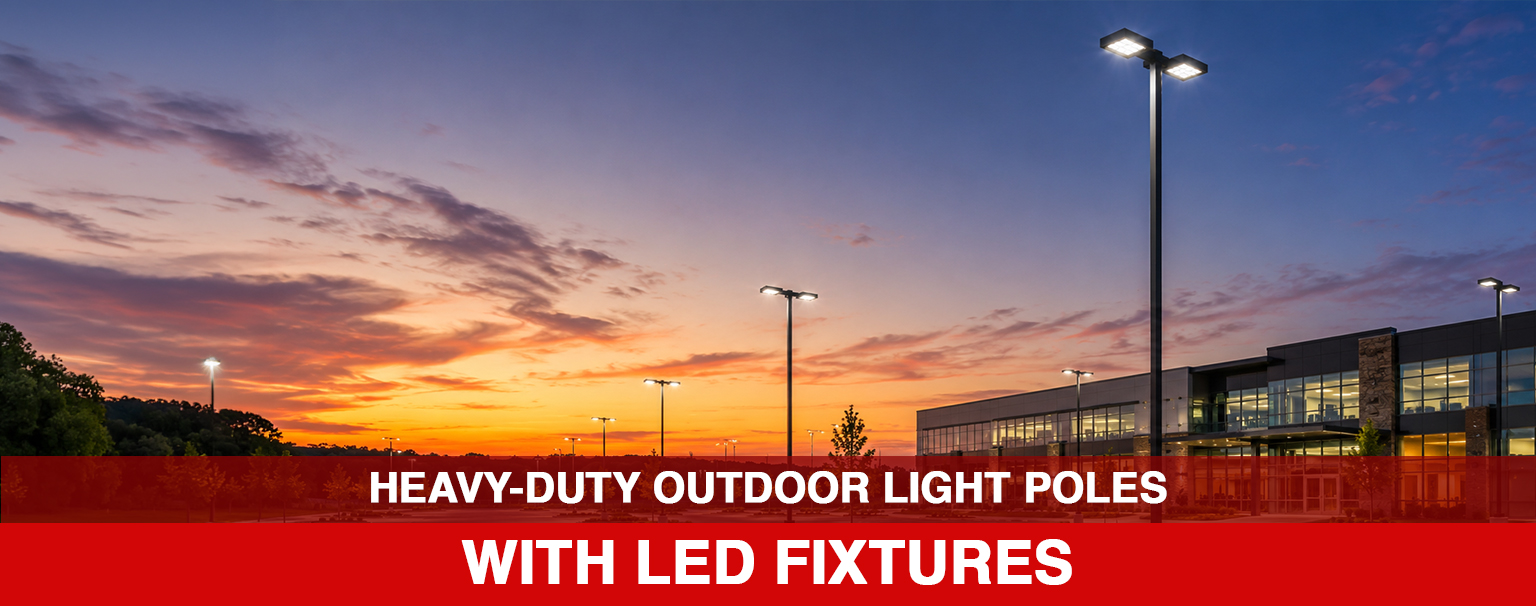
Beyond the Bulb: A Field Playbook for Picking the Right Outdoor Light Poles
- Havells Lighting
- No Comments
Master commercial property layouts with our complete field playbook on choosing Outdoor Light Poles. Compare square straight, round tapered, and direct bury systems by wind load, installation speed, and long-term durability. Most property owners and facility managers think choosing outdoor lighting is all about the fixture. They spend weeks debating lumens, color temperatures, and LED efficiency. But if you talk to any licensed electrician, structural engineer, or commercial contractor, they will tell you a different story: The pole you choose is the actual backbone of your entire investment. Choosing the wrong option can lead to structural failures, code violations, ruined LED drivers from constant vibration, and premature rust. This comprehensive guide breaks down everything you need to know about commercial outdoor light poles, structural wind ratings, and how to pick the exact configuration for your job site. Structural Engineering: How Wind Load and EPA Define Your Pole The most critical mistake buyers make is purchasing a pole based solely on physical weight capacity. In outdoor infrastructure, wind resistance dictates safety. Understanding Effective Projected Area (EPA) Every lighting fixture, arm, and mounting bracket has an EPA (Effective Projected Area) rating. This value combines the flat surface area of the fixture with its aerodynamic shape (drag coefficient). A large, boxy, traditional shoebox fixture catches the wind like a sail, giving it a high EPA. A sleek, low-profile, modern LED fixture creates less wind resistance, giving it a low EPA. The Leverage Principle and Bending Moments When high winds hit a fixture at the top of a 25-feet pole, it creates a massive lever effect. This rotational force transferred through the pole is called a bending moment, and it peaks exactly at the ground-level foundation. Before ordering any steel pole, you must cross-reference your total system EPA with local wind load requirements. If your location regularly experiences 90 MPH gusts, your pole must be structurally certified to hold that specific EPA workload at that exact wind speed. Exceeding these limits risks structural failure during extreme weather. Square Straight Steel Poles: The Commercial Workhorse If you drive through any modern retail center, corporate campus, or auto dealership, you will see Square Straight Steel Poles everywhere. They are the absolute industry standard for modern commercial properties. Architectural Real Estate Performance Architects heavily favor the Square Steel Pole because its clean, 90-degree geometric lines align perfectly with modern building facades, structured parking lot grids, concrete curbing, and linear sidewalks. They look organized, professional, and visually unobtrusive. Why Contractors Prefer a Pre-Wired Square Steel Light Pole From a purely practical standpoint, a square pole makes on-site installation straightforward. Because the faces are completely flat, it is easy for installation crews to clamp levels, align brackets, and ensure multi-fixture configurations are perfectly perpendicular. To save significantly on labor costs, experienced project managers specify pre-wired square steel light poles. Rapid Pulling: They arrive on-site with internal guide strings or factory-installed wire harnesses already inside the shaft. Reduced Lift Time: Electricians can complete electrical connections on the ground before the crane lifts the pole into place. Minimized Errors: Factory wiring eliminates field errors, short circuits, and tedious troubleshooting hours on a windy lift. Cylindrical Street Light Poles: The Public Works Standard While square options dominate commercial lots, round street light poles are the absolute standard for public roadways, highway interchanges, municipal parks, and pedestrian pathways. Even Stress Distribution and Multi-Angle Flexibility Cylindrical geometry handles wind uniquely. While a square shaft concentrates high wind stress exactly at its sharp corners, round steel light poles distribute aerodynamic stress evenly across their continuous circular surface. This enables wind to glide past smoothly from any direction. Furthermore, round poles offer total freedom for fixture orientation. Because there are no flat faces to restrict you, you can mount fixtures via bullhorn or spoke brackets at precise 60-degree, 120-degree, or odd angles to illuminate intersecting pathways, roads, and open green spaces simultaneously. BAA Compliant Standard Offering, BABA Manufacturing Available by Project Request For publicly funded projects, compliance with domestic sourcing requirements is essential. Our Round Steel Light Poles are available with BAA-compliant documentation, and BABA-compliant manufacturing can be provided upon request. Meeting these standards helps prevent procurement delays, rejected submittals, and funding issues. We provide material traceability and certification documentation to support approval processes and audits. Domestically sourced poles offer reliable quality, supply chain stability, and long-term infrastructure value. Common applications include roadways, parks, transit facilities, campuses, and federally funded improvements. Early specification of compliance requirements helps streamline procurement, approvals, and project delivery. Tapered Steel Light Poles: The High-Wind Athlete In wide-open coastal zones, vast industrial yards, or mountain highway corridors, standard straight poles can struggle. These challenging environments require the advanced engineering of a Round Tapered Steel Light Pole. The Science of Disrupting Vortex Shedding When wind blows past a non-tapered cylinder, it creates alternating low-pressure whirlpools of air on the downstream side. This aerodynamic phenomenon is known as vortex shedding. If the rhythmic frequency of these vortex whirlpools locks onto the natural structural frequency of the pole, it triggers a destructive event called harmonic oscillation. This causes the pole to sway violently and hum. Over time, this constant vibration causes microscopic metal fatigue at the base, shakes internal wiring loose, and can damage LED drivers. Why Tapering Solves the Problem A tapered pole narrows gradually from a wide, heavy-duty base to a slim top termination. Because the outer diameter is constantly shifting from top to bottom, wind cannot synchronize to form uniform vortex patterns. This eliminates harmonic oscillation completely, protecting your lighting investment from structural fatigue. Direct Burial Light Pole: The Budget-Friendly Alternative Traditional commercial lighting installations require extensive foundation engineering. You have to auger deep holes, drop in heavy steel rebar cages, pour yards of concrete, perfectly align heavy anchor bolts, and wait days for the mixture to fully cure before erecting a Base Mount Steel Pole. A Direct Burial Light Pole completely bypasses this timeline. Slashing Installation Cost and Timeline A direct bury shaft features an extended lower section designed to drop straight into a